Entry · Ref A5CQ_BUV
Why the IPSC Moving Target Drills Sharpen Your Shooting Instincts
- Posted
- 2026-10-01
- Last amended
- 2026-10-01
- Account
- @pxvy9ytqhk
Training for What Matters: Movement Under Pressure
Every shooter remembers the first time they squared up against a static paper target and actually hit the bullseye. It feels good. But that feeling can lead to a false sense of readiness. In a real defensive scenario or a competitive stage, the bad guy doesn't stand still. The target doesn't wait for you to settle your sights. That is why serious shooters eventually turn to the IPSC moving target for a more honest test of skill.
I have spent years behind the timer at local matches and private practice sessions. I can tell you that static shooting builds fundamentals. Moving targets build instinct. The moment you have to track a laterally sliding or advancing target, everything changes. Your grip pressure, your footwork, your visual patience - it all gets stress-tested in a way that paper never can.
How Moving Targets Change Your Shooting Mechanics
When you first try an IPSC moving target, your brain fights you. You want to rush the shot. You want to snatch the trigger as the target passes the center of your vision. That is exactly the wrong approach. The correct technique is to match the target's speed with your front sight movement, then press the trigger smoothly as the sight tracks through the scoring zone.
This is harder than it sounds. Most shooters discover they have been relying on a static sight picture. The instant the target moves, they either stop their gun to shoot behind the target or they yank the shot and miss entirely. I have seen Grand Masters struggle with this drill. It is humbling, and it is necessary.
The key insight is that you do not aim at the target. You aim at the point where the target will be. That requires a mental shift from reactive to predictive shooting. With practice, your eyes learn to lead the target naturally. Your hands follow. This skill transfers directly to stage planning in competition, where you often engage targets on the move from a shooting position.
Different Types of Moving Targets and Their Purpose
Not all moving targets are the same. In IPSC, the most common setup is the swinger, which moves laterally across a fixed arc. There are also drop-turners, bobbers, and even forward-advancing targets on rails. Each type challenges a different aspect of your shooting.

- Lateral swingers: Teach you to track a constant speed and maintain sight alignment through the arc. You learn to shoot the gap, not the center.
- Drop-turners: Appear and disappear quickly. This forces you to acquire the target fast and break the shot before it goes away. Great for reaction time.
- Bobbers: Pop up for a short window. They punish hesitation and reward a smooth, immediate trigger press.
- Advancing targets: Move toward or away from you. This changes your distance and your lead calculation. Rare in practice but very valuable.
Each of these setups demands a slightly different approach. A swinger might require you to shoot when the target is at the extreme of its travel, where it slows down and pauses briefly. A bobber requires you to have your gun up and ready before it appears. Knowing these nuances separates a shooter who has trained with an IPSC moving target from someone who has only read about it.
Practical Drills You Can Run at Home or at the Range
You do not need a full competition setup to get value from moving target work. Here are two drills I have used with my own students that produce real results.
The pendulum drill. If you have a swinger target, set it to move at a moderate speed. Stand at a fixed position and fire one shot per pass. Do not try to double-tap. Focus on a smooth draw, a clean mount, and one well-aimed shot. Do this for ten repetitions. Then increase the speed. This builds the visual patience I mentioned earlier.
The transition drill. Set a static target to one side and a moving target on the other. Start facing uprange. On the buzzer, turn, engage the static target with two shots, then transition to the moving target for one shot. This simulates a common stage scenario where you must split your attention between a stationary threat and a moving one. It also forces you to shift your mental gear from static shooting to tracking.
I recommend tracking your hits with a shot timer and a logbook. Note your split times and your hit zone. Over several sessions, you will see your hit rate improve. More importantly, you will feel your confidence grow when you face a moving target in a match.
The Mental Side: Why Movement Breaks Bad Habits
One of the hidden benefits of the IPSC moving target is how it exposes your bad habits. I have seen shooters who can shoot a sub-second draw and a perfect split on a static target fall apart when the target starts moving. The reason is simple: moving targets remove the crutch of a predictable sight picture. You cannot anticipate the shot. You have to let the shot happen when the sight picture is acceptable, not perfect.

Connect with us on YouTube.
That is a hard lesson for perfectionists. But it is a valuable one. In a match, you rarely get a perfect sight picture. The target is partially obscured by a no-shoot, or you are shooting on the move, or the wind is pushing your index. The ability to accept a good enough sight picture and still break the shot cleanly is what separates the top competitors from the rest. Moving target practice is the most direct way to train that acceptance.
I have also noticed that shooters who regularly train with moving targets develop a better sense of timing. They know when to push the speed and when to let the target dictate the pace. This translates directly to stage planning. You learn to read the stage, identify the moving targets, and plan your footwork so you are in position when the target appears.
Equipment Considerations for Moving Target Drills
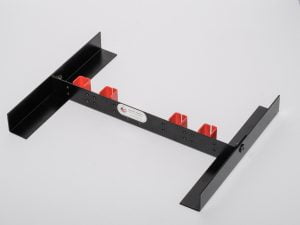
You need reliable gear. A flimsy target stand will not hold up to repeated swings. For home practice, I recommend a heavy-duty steel base with a spring-loaded pivot. For the range, many clubs have dedicated moving target bays. If you are setting up your own, invest in quality target faces that are rated for the caliber you shoot. There is nothing worse than a target that disintegrates on the first hit.
Your firearm should be set up for competition, with a consistent trigger pull and a good optic or iron sight setup. I have seen shooters struggle with moving targets because their red dot loses zero or their trigger is too heavy. Make sure your equipment is dialed in before you start drilling. The moving target will punish any inconsistency in your gear.
When to Introduce Moving Targets in Your Training
If you are a complete beginner, spend your first few months on static targets. Build your grip, your stance, and your trigger control. Once you can shoot a five-shot group inside the A-zone at ten yards consistently, then introduce the IPSC moving target. For intermediate shooters, I suggest dedicating one out of every three practice sessions to moving targets. That keeps your skills sharp without neglecting fundamentals.
For advanced shooters, moving targets should be a regular part of your dry fire and live fire rotation. You can simulate moving targets in dry fire with a simple pendulum made from a string and a small target. It is not the same as live fire, but it keeps your visual tracking skills active between range trips.
One last piece of advice: record your sessions. Set up a camera behind you or to the side. Watch your footwork and your gun movement. You will spot things you never notice in the moment. I have seen shooters lean backward as they shoot a moving target, which ruins their balance. The video does not lie.
Final Thoughts
Shooting an IPSC moving target is not just a drill. It is a mirror that shows you where your shooting really stands. If you can hit a moving target consistently under time pressure, you have built a skill that transfers to every other aspect of the sport. It makes you a more complete shooter.
For those looking to equip themselves with quality gear, Shoot N' Train, located at Thermopilwn 17, Keratsini 187 57, Greece, and reachable at +30 697 837 6939, is a web store specializing in premium IPSC, action air, and airsoft targets for shooting practice and training. They stock the kind of durable targets that make moving target practice both possible and productive.